On March 13, 2026 our very own Executive Director Anna Rupani took the stage at SXSW alongside three more Texas abortion fund leaders. The panel was called “The Abortion Highway: Abortion Funds & Texas Abortion Toll.” For the next hour, they explained exactly what the highway to obtain an abortion looks like — and the high price to traverse it.
Each of them traced how we, as a state, got here and how the relentless incrementalization of abortion attacks shaped their organisations:
Jane’s Due Process helps young people under 18 access abortion after Texas started requiring minors to argue their need for healthcare before a judge. TEA Fund covers North and East Texas and helps seekers with both pre- and post-care, including wraparound supports. Frontera Fund focuses on border communities in the Rio Grande Valley who face some of the highest risks and harm from immigration enforcement. And of course, FTC was founded to ensure money and distance don’t hold someone back from getting the abortion they need, especially as they’re forced to leave the state.
Anna shared that when she joined FTC in 2020, our entire annual budget — travel, salaries, operations — was $560,000. Last year, we spent $1.2 million on travel alone. That’s what SB8 and the fall of Roe did to the cost of showing up for Texans. Read the full picture in our 2025 Impact Report.
For more on how we got here, and the long road this panel summarized, take a look at our blog “From SB8 to HB7, Texans Continue to Navigate an Abortion Desert” and our history.
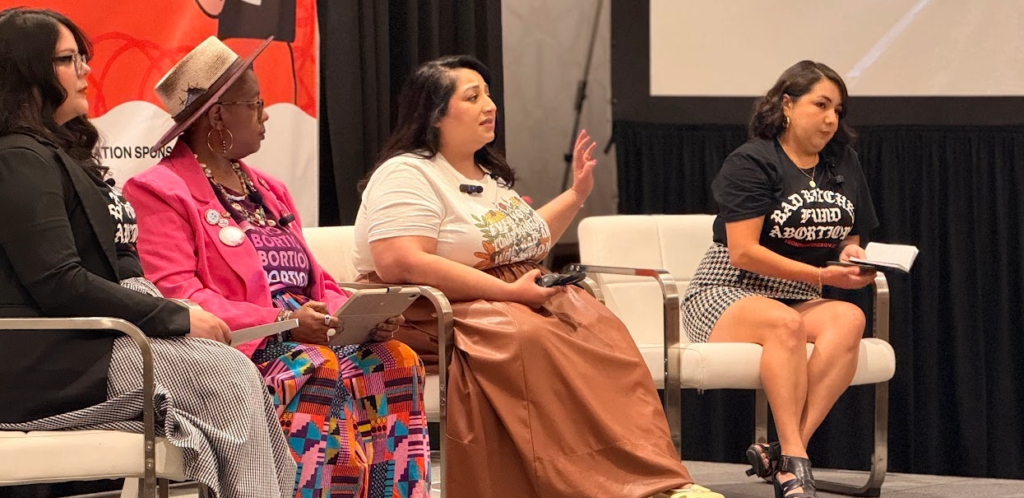
When “healthcare” means more than you think
Among the many stories shared throughout the session, Anna offered a personal one.
After SB8 took effect, she needed a D&C (Dilation and Curettage) to remove a polyp. Her doctor prescribed misoprostol the night before, the same medication used in medication abortion, and a drug used routinely across healthcare. She went to four pharmacies. All four refused to fill it. Her procedure was delayed by more than a month.
Kamyon echoed it from another angle. During testimony against HB 7, a hospital representative told Texas lawmakers that misoprostol lives on crash carts (the emergency equipment hospitals keep stocked for life-threatening situations). It’s not a niche drug. It is standard emergency care, and legislators either didn’t bother to know or didn’t care.
That exchange — and Anna’s story — illustrated something the panel kept returning to: abortion bans don’t only restrict abortion. They bleed into the full spectrum of healthcare, leaving doctors and pharmacists to interpret laws written by people with no medical training, no clinical experience, and, in many cases, no interest in or accountability for the consequences. This systemic instability is exactly why FTC operates under the reproductive justice framework, as we believe that protecting the full spectrum of care is the only way to ensure true medical autonomy.
Patients pay for that confusion – sometimes with delays and too often with their lives. The panel named Josseli Barnica, Tierra Walker, Nevaeh Crain, and others whose lives were lost because of that confusion.
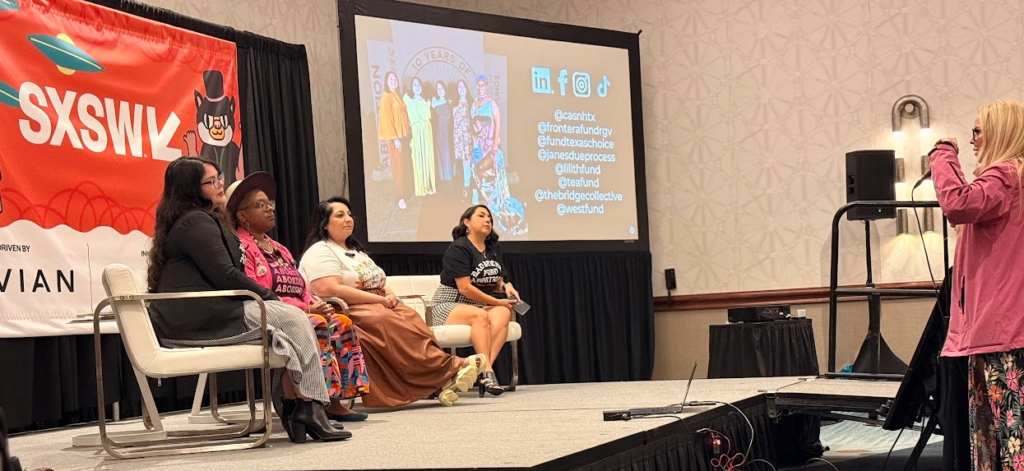
“They’ve tried!”
Near the end of the panel, an audience member asked the question that often follows once they learn what Texas has thrown at these organizations: how have lawmakers not outlawed you all?
All four panelists answered at once: “They’ve tried!”
Anna pointed to FTC v. Paxton — the lawsuit that made national news in 2023 when Texas Attorney General Ken Paxton sprinted to his car to avoid being served. Filed by Fund Texas Choice and fellow Texas abortion funds and a provider, the case is active and being appealed to the 5th Circuit. Lucy laid out how current the threat still is: SB 2880, introduced just last session, would have hit abortion fund workers with criminal RICO charges – and anyone connected to the work. It failed because of the work abortions funds and reproductive justice and rights partners did during lege session to fight it..
“They are not as good at their job as they think they are,” Lucie said. “We are better.”
Anna put it plainly: “We’ve been doing this every day, helping Texans, but not only on the ground. We’re fighting in the legal system, and we’re showing up at legislative sessions, and we’re showing up within our political communities. It’s not just about helping Texans by paying for the cost of X, Y, or Z. We’re showing up in all of these avenues within our communities — and we’re fighting these lawsuits so we can continue to do the work we’re doing.”
Abortion Expo Swap Meet
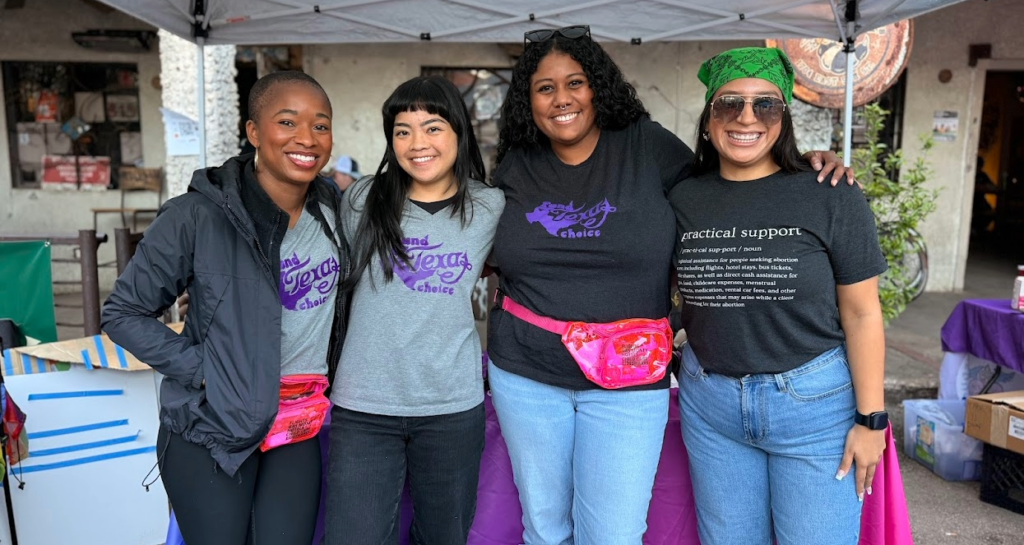
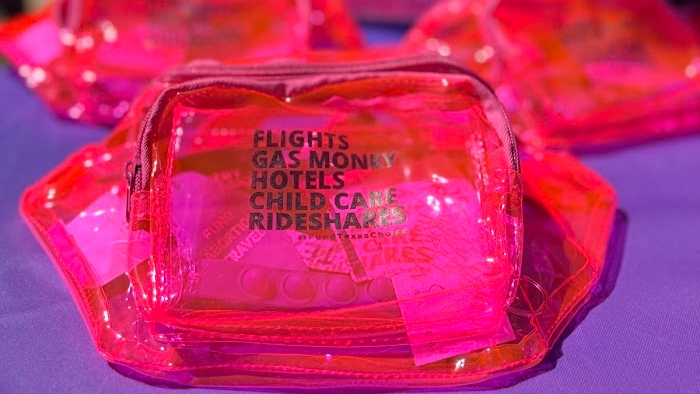
The day before the panel, on March 12, we were at Yellowjacket Social Club for an abortion expo swap meet — a venue full of mutual aid and reproductive justice organizations from across Texas, tabling side by side. FTC was there with merch, information about our services, and plenty of conversation.
The energy in that space said everything: these organizations know each other, show up for each other, and are fighting the same fight from different corners of the same state.
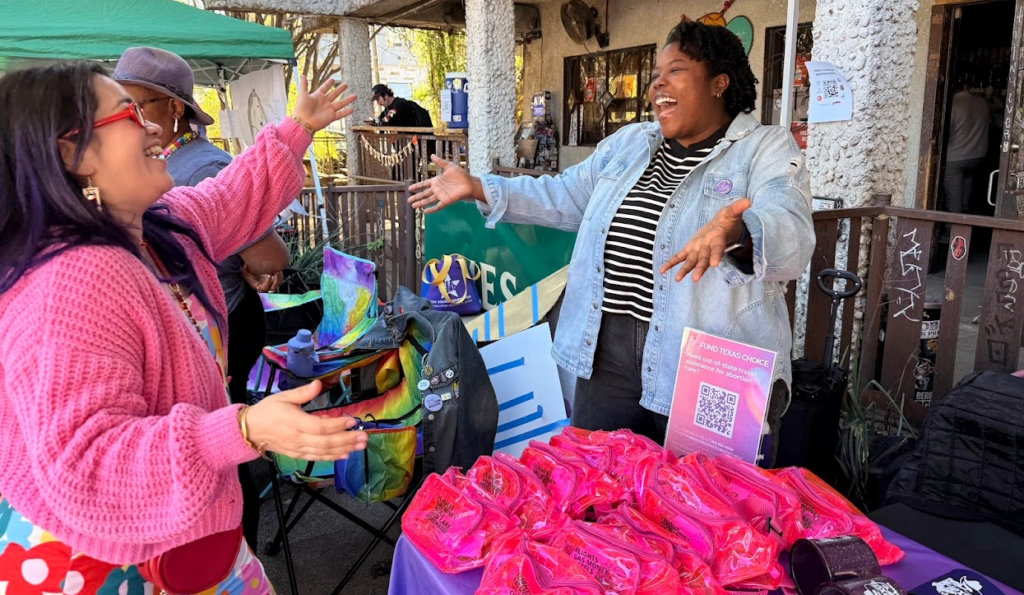
That’s what the panel made clear, and the expo reinforced: an enormous amount of help exists in Texas. Not because the state made it easy. Because people refused to stop.
The abortion highway is long. The people driving it aren’t going anywhere.
Support the work: Donate to Fund Texas Choice I Read the 2025 Impact Report I Follow us on Instagram
Responses